What it is
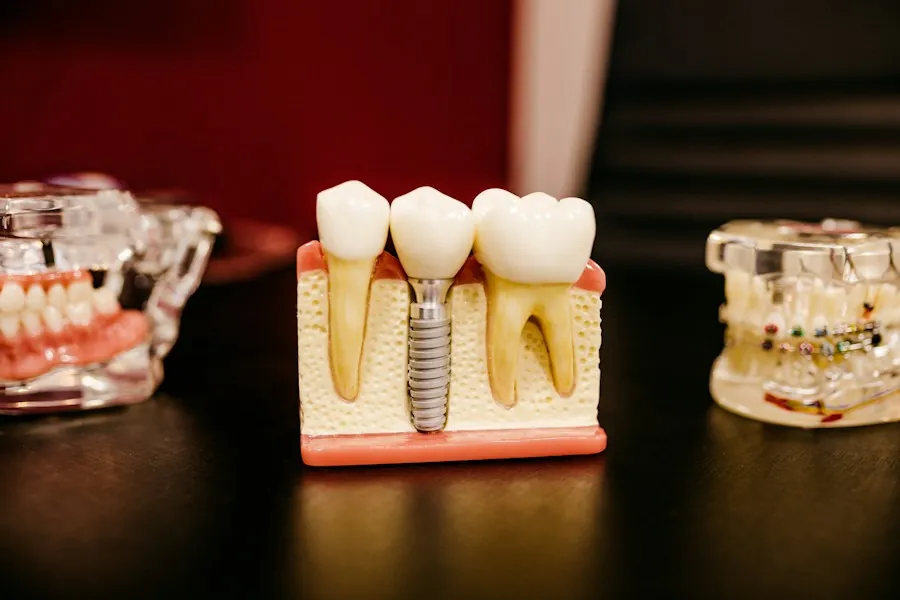
A dental implant is a small post, usually made of titanium or a similar material, that is placed in the jawbone to act as a replacement for a missing tooth root. A replacement tooth, often called a crown, is then attached on top. Some implants also help support bridges or dentures.
An implant has a few parts: the post in the bone, a connector piece called an abutment, and the visible crown. These parts can have different lifespans. The post that bonds with the bone is often discussed as the long-lasting part, while the crown may wear and need repair or replacement over time.
So when people ask how long dental implants last, it helps to ask which part they mean. A dentist can explain how each piece is expected to hold up in your specific situation, since no one can promise an exact timeline.
How it’s traditionally been approached
Missing teeth have long been replaced with options such as removable dentures, fixed bridges, and, more recently, implants. Each approach has its own tradeoffs in comfort, maintenance, appearance, and how it interacts with neighboring teeth and the jawbone.
Implants have generally been considered when there is enough healthy bone and gum tissue to support them, and when a person can keep up with cleaning and checkups. Some people need extra steps first, such as treating gum disease or building up bone, and a dentist decides whether those apply.
Factors commonly discussed as affecting longevity include oral hygiene, gum health, smoking, certain health conditions, teeth grinding or clenching, the quality of the bone, and the skill and planning of the care team. Regular dental visits are traditionally part of keeping implants healthy.
How the right dentist may help
The right dentist may help by examining your mouth, reviewing your health history, and taking images to understand your bone and gum health. A visit is usually a conversation first. You can share your goals, worries, and questions, and nothing should feel rushed. If you feel nervous, it is completely okay to say so, since many people do.
Implants may be placed by general dentists with additional training or by specialists such as oral and maxillofacial surgeons or periodontists, and prosthodontists often help design the replacement teeth. Dentists are licensed by their state dental board, and you can ask about their training and experience with implants.
Helpful questions to ask: What can affect how long my implant lasts? What upkeep will I need at home and at checkups? What happens if the crown wears out or a problem develops? Can I have a written treatment plan and estimate? Costs vary by practice, location, and case, so a written estimate helps you compare clearly.

The whole-person view
Your mouth is part of your whole body, and body, mind, and stress all affect each other. Stress can show up as teeth grinding or clenching, and overall health, sleep, and habits can influence how your gums and bones do over time. Looking after the whole picture may support your dental care.
If dental anxiety or stress makes appointments hard, support exists. Somatic Experiences offers body-based approaches that some people find helpful for calming the nervous system, and Therapists.plus can connect you with talk therapy. These are optional resources alongside, not instead of, care from a licensed dentist.
Somatic Experiences: nervous system regulation →Therapists.plus: anxiety panic and ocd →
Keep in mind
- This page is educational only and is not dental or medical advice; only a licensed dentist can evaluate you and say what is appropriate.
- No one can guarantee how long an implant will last, so be cautious of anyone who promises a specific number of years.
- Facial or neck swelling with fever, trouble breathing or swallowing, uncontrolled bleeding, or a serious face or jaw injury is a medical emergency: call 911 or go to the ER. A knocked-out adult tooth needs a dentist right away.
- If a problem like pain, looseness, or swelling around an implant appears, contact your dentist promptly rather than waiting.
Not sure where to start? Answer a few gentle questions and choose who you’d like to hear from.
Frequently asked questions
How long do dental implants last?
There is no guaranteed number, because lifespan depends on your health, gum and bone condition, daily care, habits, and the quality of the planning and placement. Many implants are designed as a long-term option, and the crown on top may need repair or replacement sooner than the post. A licensed dentist can discuss what to expect for you after an exam.
Do dental implants need to be replaced?
Not always, but parts can wear over time. The post in the bone is often the most durable part, while the crown or small connecting pieces may need maintenance or replacement. Your dentist can explain what to watch for and how often to have checkups.
What can shorten the life of a dental implant?
Common factors include gum disease around the implant, poor cleaning habits, smoking, teeth grinding, and certain health conditions. Missing regular checkups can also let small problems grow. Your dentist can talk through which factors may apply to you without judgment.
How do I take care of dental implants?
Implants are generally cared for much like natural teeth, with thorough brushing, cleaning between teeth, and regular dental visits. Your dentist or hygienist can show you tools and techniques that suit your mouth. Ask what routine they recommend for your situation.
How much do dental implants cost?
Costs vary by practice, location, and case, so it is not possible to give a fair number here. Ask any dentist for a written treatment plan and estimate that lists each step. This makes it easier to compare options and ask about payment questions.
Who should I see about dental implants?
Start with an exam by a licensed dentist (DDS or DMD), who can evaluate your needs and refer you if needed. Implants may be placed by general dentists with extra training or by specialists such as oral and maxillofacial surgeons or periodontists. It is fine to ask about their training and experience.
Educational resource. Tuung shares general information and connects people with independent dentists. It is not medical advice, diagnosis or treatment. Talk with a licensed professional about your health.