What it is
A dental bridge is a replacement tooth (or teeth) that is held in place by crowns on the teeth next to the gap. Think of it as a small span connecting two supports. It is made in a dental lab and then fixed in place by your dentist.
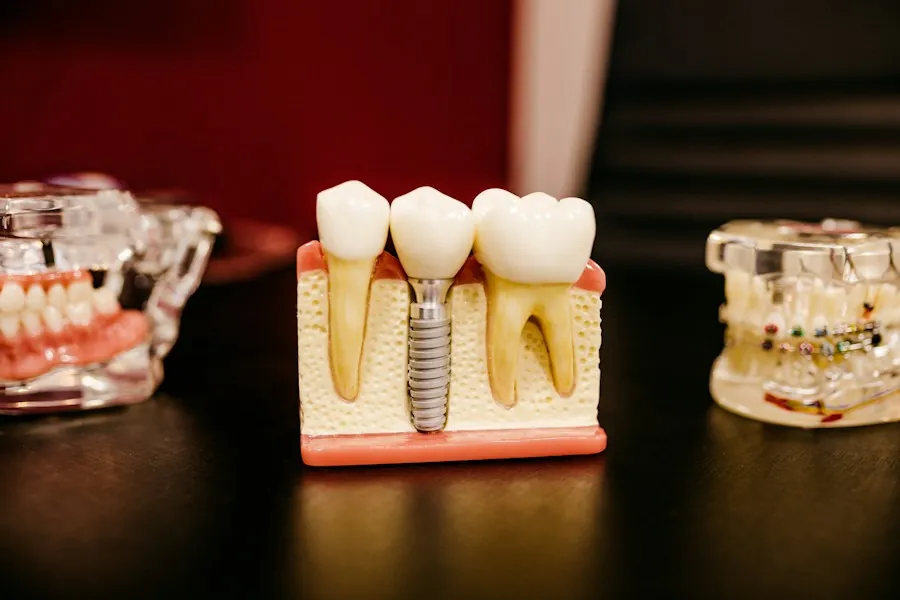
A dental implant is a small post, often made of titanium or a similar material, that is placed in the jawbone where a tooth root used to be. After the area heals, a crown is attached on top. In this way it replaces the root as well as the visible part of the tooth.
The two approaches differ in what they rely on, how many visits they involve, and how they interact with nearby teeth and bone. Which one fits depends on your mouth, your health and your goals. Only a licensed dentist can tell you what is appropriate after an exam.
How it’s traditionally been approached
Bridges have been used for a long time and are a familiar way to fill a gap. The process typically involves preparing the neighboring teeth so crowns can fit over them, then placing the finished bridge. Many people appreciate that it is a well-understood approach.
Implants became widely used more recently in the long history of dentistry. They often involve a team: a general dentist, and sometimes a specialist such as an oral and maxillofacial surgeon, periodontist or prosthodontist. Treatment is usually spread over several appointments with healing time in between.
Both options sit alongside others, such as removable partial dentures or simply monitoring the space. Each has trade-offs involving time, upkeep, comfort, the health of nearby teeth, and budget. Dentists often walk patients through these side by side.
How the right dentist may help
The right dentist may help by examining your teeth, gums and bone, reviewing your health history, and possibly taking images such as X-rays. That information helps them explain which options may be realistic for you. A good visit should feel like a conversation, and you can ask to pause at any time.
Helpful questions include: Which options are possible for my situation? How would each affect my neighboring teeth? What does care and cleaning look like afterward? How many visits should I expect, and what happens if something needs adjusting? Which providers would be involved?
Costs vary by practice, location and case, so ask for a written treatment plan and estimate before deciding. It is fine to ask about payment options, to get a second opinion, or to take time to think. If dental visits make you nervous, tell the team. Many practices are happy to go at your pace.

The whole-person view
Your mouth is part of your whole body, and body, mind and stress all influence each other. Worry about a missing tooth, or about the dentist, can show up as tension in the jaw, trouble sleeping or avoiding care. Being gentle with yourself about these feelings is a good first step.
Some people find that body-based support such as Somatic Experiences helps them notice and settle stress before appointments, while others value talk therapy through Therapists.plus for dental anxiety or worries about appearance. These are optional extras that can sit alongside dental care, not replacements for it.
Somatic Experiences: nervous system regulation →Therapists.plus: anxiety panic and ocd →
Keep in mind
- This page is educational only and is not dental or medical advice. A licensed dentist must examine you before any treatment is recommended.
- Only a dentist can decide whether a bridge, an implant or another option suits your mouth and health. Dental implants and crowns are regulated dental devices, so ask your provider about the materials they use.
- Facial or neck swelling with fever, trouble breathing or swallowing, uncontrolled bleeding, or a serious face or jaw injury is a medical emergency. Call 911 or go to the ER. A knocked-out adult tooth needs a dentist right away.
- Tooth pain, swelling or signs of infection should be checked promptly by a dentist. If you are in emotional crisis, call or text 988.
Not sure where to start? Answer a few gentle questions and choose who you’d like to hear from.
Frequently asked questions
What is the difference between a dental bridge and an implant?
A bridge is supported by crowns on the teeth beside the gap, while an implant is placed in the jawbone to replace the root. Both fill the space left by a missing tooth. A dentist can explain which may fit your situation after an exam.
Is a dental bridge or an implant better?
Neither is better for everyone. The right choice depends on the health of your neighboring teeth, your gums and bone, your overall health, your timeline and your budget. A licensed dentist can walk you through the pros and cons for your mouth.
Does a bridge damage the teeth next to it?
A traditional bridge typically requires shaping the neighboring teeth so crowns can fit over them. Whether that matters for you depends on the condition of those teeth. Ask your dentist how each option would affect them.
Do dental implants take longer than bridges?
Implants often involve more appointments and healing time because the post needs to settle in the jawbone. Bridges are usually completed in fewer visits. Your dentist can describe a realistic timeline for your case.
How much do a dental bridge and an implant cost?
Costs vary by practice, location and case, so there is no single answer. Ask your dentist for a written treatment plan and estimate, and ask what insurance or payment options may apply.
Who places dental implants and bridges?
Bridges are commonly made by general dentists or prosthodontists. Implants may be placed by a general dentist or a specialist such as an oral and maxillofacial surgeon or periodontist, often working with a restorative dentist. Check that your provider is licensed by your state dental board.
Educational resource. Tuung shares general information and connects people with independent dentists. It is not medical advice, diagnosis or treatment. Talk with a licensed professional about your health.