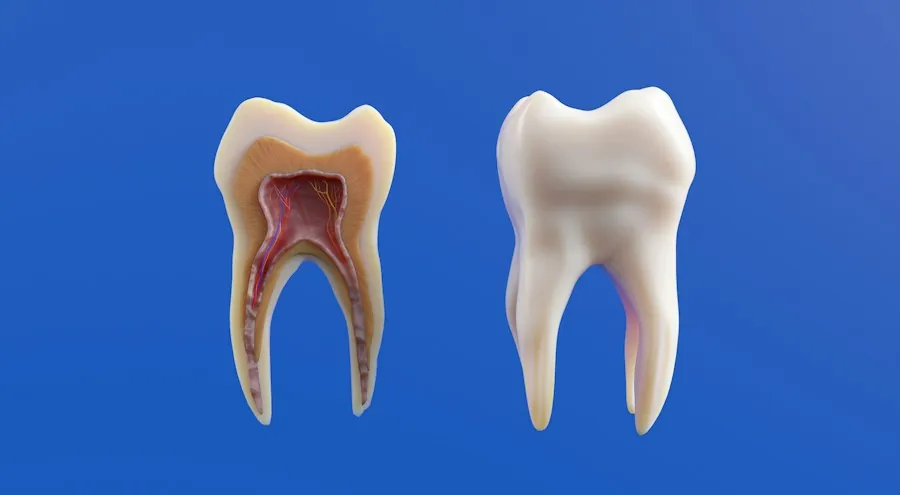
What it is
A root canal is a dental procedure that treats the inside of a tooth. Inside every tooth is a soft center called the pulp, which contains nerves and blood vessels. When that pulp becomes irritated or infected, a dentist may talk with you about root canal treatment as one option.
The pain people associate with root canals usually comes from the problem that led to the treatment, such as a deeply decayed or cracked tooth, rather than from the procedure itself. A tooth that is sensitive to hot or cold, aches, or hurts when you bite can have many possible causes, and only an exam by a licensed dentist can tell what is going on.
The treatment generally involves cleaning out the inside of the tooth, sealing it, and then protecting it, often with a crown. Whether it is the right choice for any particular tooth is something a dentist or an endodontist (a dental specialist in root canals) decides after an exam and imaging.
How it’s traditionally been approached
Traditionally, root canal treatment has been performed by general dentists and by endodontists, who have additional specialty training. Dentists are licensed by their state dental board, and the approach is decided case by case.
Comfort has long been a part of the process. Dentists typically use a local anesthetic to numb the tooth and the surrounding area before they begin, so many people feel pressure or movement but not sharp pain. Some practices also offer options for anxious patients, and sedation can only be provided by dentists permitted by their state board.
Afterward, it is common for a tooth to feel tender or sore for a little while as the area settles. Dentists often discuss what to expect and what comfort measures are appropriate for you. Alternatives, such as removing the tooth, are also sometimes discussed, and the choice depends on the individual situation.
How the right dentist may help
The right dentist may help by listening to your concerns first, examining the tooth, and taking X-rays so they can explain what they see in plain language. A good visit should leave you understanding your options, not feeling rushed or judged. It is completely okay to say you are nervous.
During a visit, you can generally expect the area to be numbed, and you can usually ask to pause if you need a break. Many offices agree on a hand signal in advance. If the numbing does not feel like enough, tell the team so they can address it.
Helpful questions to ask include: What is causing my symptoms? What are my options, including not treating it right away? Who will do the procedure, a general dentist or an endodontist? What should I expect afterward? Ask for a written treatment plan and estimate, since costs vary by practice, location and case.

The whole-person view
Body, mind and stress affect each other, and dental fear is very common. Worry about pain can make the body tense, and tension can make a visit feel harder. Being kind to yourself, asking questions and going at a comfortable pace can all be part of a calmer experience.
If dental anxiety feels big, some people find support outside the dental chair helpful. Somatic Experiences offers body-based approaches to working with stress, and Therapists.plus can connect you with talk therapy options. These are complements to, not replacements for, care from a licensed dentist.
Somatic Experiences: nervous system regulation →Therapists.plus: sleep focus and habits →
Keep in mind
- Only a licensed dentist can examine your tooth and tell you whether a root canal or another option is appropriate; this page cannot diagnose you.
- Facial or neck swelling with fever, trouble breathing or swallowing, uncontrolled bleeding, or a serious face or jaw injury is a medical emergency. Call 911 or go to the ER.
- Tooth pain, swelling or a possible abscess should be checked promptly by a dentist rather than waited out, and a knocked-out adult tooth needs a dentist right away.
- If dental fear or stress ever feels overwhelming or you are in emotional crisis, call or text 988 (the Suicide & Crisis Lifeline).
Not sure where to start? Answer a few gentle questions and choose who you’d like to hear from.
Frequently asked questions
Does a root canal hurt?
Most people report that the procedure feels similar to getting a filling because the tooth and surrounding area are numbed first. You may feel pressure or vibration, but sharp pain is not the goal. Experiences differ, so tell your dentist right away if you feel discomfort.
Does a root canal hurt more than a tooth extraction?
There is no one answer, because both are done with numbing and each person's experience differs. Recovery feelings can also vary based on the tooth and the situation. A licensed dentist can explain what to expect for your specific case.
Does a root canal hurt after the numbness wears off?
Some tenderness or soreness is common for a short time after the numbness fades, especially if the tooth was inflamed beforehand. Your dentist can explain what is typical and what comfort steps are appropriate for you. Call the office if pain is severe or getting worse.
Does a root canal hurt if you are nervous about the dentist?
Being nervous is very common and nothing to be ashamed of. Tell the dental team about your worry so they can go slowly, explain each step and discuss comfort options. Sedation, where offered, is only provided by dentists permitted by their state dental board.
Should I see a dentist or an endodontist for a root canal?
Either may be able to help. General dentists perform many root canals, while endodontists are specialists with additional training who focus on the inside of the tooth. Ask your dentist which is a good fit for your tooth and whether a referral makes sense.
What should I do if my tooth hurts and I think I need a root canal?
Make an appointment with a licensed dentist for an exam, since many different problems can cause tooth pain. If you have facial or neck swelling with fever, trouble breathing or swallowing, or uncontrolled bleeding, call 911 or go to the ER. Costs vary by practice, location and case, so ask for a written treatment plan and estimate.
Educational resource. Tuung shares general information and connects people with independent dentists. It is not medical advice, diagnosis or treatment. Talk with a licensed professional about your health.